 Reviews

 Proudly American

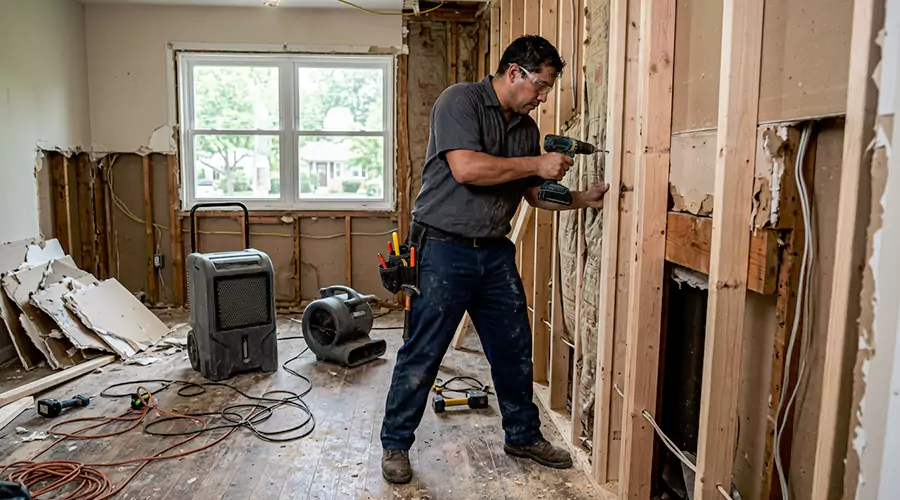
Water damage reconstruction includes rebuilding the parts of a property that were removed or permanently damaged during a water loss. It begins after extraction and structural drying are complete. Common work can include drywall replacement or flooring installation before the room is returned to a finished condition.
Reconstruction is different from emergency mitigation. Mitigation stops active damage while reconstruction repairs what could not be saved.
When Does Water Damage Reconstruction Begin?
Reconstruction should begin after the affected structure has been dried to an acceptable condition and the moisture source has been corrected. Closing a damp wall too early can trap moisture behind new materials.
The normal order is:
- Stop the water source.
- Extract standing water.
- Remove materials that cannot remain.
- Dry the structure.
- Verify moisture conditions.
- Develop the rebuild scope.
- Begin reconstruction.
The ANSI/IICRC S500 standard includes structural restoration and building-material considerations as part of professional water damage restoration.
What Materials Are Commonly Replaced During Reconstruction?
The materials replaced depend on what was removed during mitigation and what could not be dried successfully. Drywall is one of the most common reconstruction items. Flooring can also require replacement when swelling or contamination prevents reuse.
Common rebuild work can include:
- Drywall
- Insulation
- Baseboards
- Flooring
- Trim
- Cabinet components
- Ceiling finishes
- Paint
Reconstruction after water damage should replace only materials that need repair rather than automatically rebuilding every surface in an affected room.
Does Reconstruction Include Drywall Repair?
Yes. Drywall replacement is a common part of the reconstruction phase when panels were removed to expose wet cavities or because the board became too damaged to retain. New drywall must be installed after framing and wall cavities are sufficiently dry.
Drywall work may involve:
- Installing replacement insulation where required.
- Hanging new drywall.
- Taping the joints.
- Applying joint compound.
- Matching existing texture.
- Priming and painting.
Matching old wall texture can sometimes take longer than installing the panel itself.
Does Water Damage Reconstruction Include Flooring?
Flooring reconstruction can include replacement or repair depending on the material. Laminate that swells after saturation is often difficult to restore. Some hardwood can be dried successfully while severely buckled boards may need replacement.
| Flooring Condition | Possible Reconstruction |
|---|---|
| Carpet removed during mitigation | New carpet or padding |
| Swollen laminate | Replacement |
| Stable hardwood after drying | Refinish if needed |
| Buckled hardwood | Repair or replace boards |
| Damaged subfloor | Structural repair before finish flooring |
New flooring should not be installed over a subfloor that still contains excess moisture.
What Happens to Cabinets and Trim?
Cabinetry and trim are evaluated separately because water can affect lower sections without destroying the entire installation. Baseboards removed during drying can sometimes be reused. Swollen fiberboard trim is more likely to require replacement.
Cabinet reconstruction may include:
- Replacing damaged toe kicks
- Repairing cabinet ends
- Reinstalling salvageable units
- Replacing swollen panels
- Matching finishes
A kitchen water loss can take longer to rebuild when cabinets must be removed to reach wet flooring or wall cavities.
Are Plumbing and Electrical Repairs Part of Reconstruction?
They can be. The reconstruction scope may include plumbing or electrical work when those systems were damaged or when walls must remain open for repairs. For example, a burst pipe must be repaired before the wall closes. Electrical components exposed to water also need proper evaluation before new drywall covers the area. Water damage restoration and repair may therefore involve more than cosmetic finishes when building systems were affected.
How Long Does Reconstruction Take?
Minor reconstruction can take several days while a room requiring drywall plus flooring may take one to three weeks. Multi-room rebuilding can extend for several weeks. Structural repairs or delayed material orders can push the timeline longer.
| Reconstruction Scope | Typical Planning Time |
|---|---|
| Small drywall repair | Several days |
| Single-room rebuild | 1 to 3 weeks |
| Several rooms | 3 to 6 weeks |
| Major structural rebuilding | Several months |
These ranges begin after mitigation and drying have been completed. The drying period is separate from the reconstruction schedule.
What Can Delay the Reconstruction Process?
Reconstruction can stall when drying has not been verified or the damage scope changes after walls are opened. Material availability also affects scheduling. Permits may be needed for structural or building-system repairs.
Common delays include:
- Hidden moisture
- Additional damage behind walls
- Material backorders
- Insurance scope review
- Permit requirements
- Custom finish matching
Starting construction before the scope is clear can create more delays later.
What Can You Check Before Reconstruction Starts?
You can review the damaged area to confirm that obvious moisture problems have been corrected. Moisture readings are more useful than touch alone because dry-looking wood can still hold excess moisture.
Before rebuilding:
- Confirm the original leak is repaired.
- Ask whether drying goals were reached.
- Check exposed cavities for damp materials.
- Review what will be repaired.
- Compare the rebuild scope with removed materials.
Do not close walls while framing still feels damp or moisture readings remain elevated.
When Should You Call a Professional?
Professional reconstruction becomes appropriate when the work involves several trades or structural materials. Electrical repairs and major plumbing changes also require qualified work. Large flooring areas can require careful moisture assessment before replacement begins.
Consider professional help when:
- Structural framing was damaged.
- Electrical components became wet.
- Several rooms require rebuilding.
- Subfloor damage is present.
- Cabinets need removal.
- Permits may be required.
- The rebuild scope is unclear.
Water damage reconstruction should restore the damaged space only after moisture conditions are stable.
How Can You Avoid Problems After Reconstruction?
Future problems are less likely when the original water source is fixed and materials are dry before they are enclosed. Moisture trapped behind new finishes can lead to staining or mold growth later.
Use this final checklist:
- Confirm the leak is repaired.
- Keep photos of open wall cavities.
- Record moisture readings where available.
- Inspect new flooring for movement.
- Watch repaired ceilings for staining.
- Investigate recurring odors promptly.
Good documentation also helps if a problem appears after restoration after water damage has been completed.
Conclusion
Water damage reconstruction is the rebuilding stage that follows extraction and structural drying. It can include drywall or insulation replacement plus flooring and finish repairs. The scope depends on which materials could not be saved during mitigation. Reconstruction should never cover damp cavities or an unresolved leak. If structural or electrical work is involved, qualified professional assessment can help the rebuild proceed safely.
Frequently Asked Questions
Is reconstruction included in water damage mitigation?
Not always. Mitigation usually focuses on stopping damage and drying the property while reconstruction covers later repairs.
Can reconstruction begin as soon as the water is removed?
No. The remaining structure should be properly dried before new finishes close walls or floors.
Does reconstruction include painting?
It often does when drywall or ceiling repairs require new finishing.
Can damaged hardwood be refinished instead of replaced?
Sometimes. Hardwood that dries successfully and remains structurally sound may be refinished instead of removed.
Who replaces drywall after water mitigation?
The reconstruction contractor or qualified repair contractor normally handles the rebuilding phase if it was not included in the mitigation scope.
Is reconstruction needed after every water loss?
No. Small leaks may need extraction and drying without major rebuilding when affected materials remain usable.